Therapy: At times, clinically I was aware of the process, but applying it to myself, I could be clueless. My journey leads to this anonymous place where I can tell of my life of abuse and trauma primarily through my past journals, current commentary, some current journaling and posts on specific issues I face. I hope to increase awareness & compassion for those of us with mental illness.
Click on the tab that you want. Scroll down to posts to read.
Welcome!!! Please, if you are new here, READ THIS FIRST!!! Thank You!!!
Thank you for visiting. Content MAY BE TRIGGERING ESPECIALLY FOR THOSE WHO HAVE EXPERIENCED ABUSE, STRUGGLE WITH SELF-INJURY, SUICIDE, DEPRESSION OR AN EATING DISORDER. Contains graphic descriptions of suicidal thoughts, self-injury and emotional, physical and sexual abuse. Do not read further if you are not in a safe place. If you are triggered, please reach out to your support system, a mental health professional or call 911.
Disclaimer: Although I have worked with persons with mental illness for twenty years, I do not have a Master's Degree or a license. This is not meant to be a substitute for mental health care or treatment. Please obtain professional assistance from the resources listed on the right of the page, if needed. And call 911 if you or someone is in immediate danger.
A key word that you will see:
Fragmentation: a mental process where a person becomes intensely emotionally focused on one aspect of themselves, such as “I am angry” or “no one loves me,” to the point where all thoughts, feelings and behavior demonstrate this emotional state, in which, the person does not or is unable to take into account the reality of their environment, others or themselves and their resources. This is a term that my therapist and I use and is on the continuum of dissociation.
Well, I owe you an update. I did go on my pre-interview at Argosy and it went well She seemed to really like me. I was able to be myself despite being 20 minutes late as I became hopelessly lost. If I get all of my information in, during August 2012 or sooner, I will know by the end of this year whether or not I am admitted. Wouldn't that be a great potential Christmas gift. I had the interview on a Monday and by Tuesday morning, my application process had begun. I just need my GRE score and I take the test on July 24th and my letters of recommendation need to be received.
A couple of things have changed. One, the class schedule is all over the place...some evening, some morning, some afternoon and some on Saturday. The other part is that they now require the dreaded GRE. I do horrible on standardized tests. The other part is that I haven't been in school in twenty years, so I am so rusty on the stuff on the GRE.
Another thing came up, I found a school that I prefer over Argosy which seems to suit my needs better. It is Alliant International University and is only 4 years instead of 5, class schedule is stable, I know others who have gone through the program, it is only two miles from my therapist and they seem to have higher standards. The last part is both a blessing and a curse.
Alliant International University
Since, I've been out of school for sooooooooooo long, I need to take the subject test in Psychology. There has been so many new things and research since I graduated. Instead of taking the courses of which I know much of the information, I've purchased the textbooks and plan to use them. I'm actually looking forward to this part. The same part occurs with if they receive all the information before the end of the year, I might know by the beginning of next year.
Boy, have textbooks gone up in price, but they have been purchased. My essays, application, resume and fees are being sent out today. I really want to get into Alliant, but I can't put all of my hopes into this program. But, it is hard not too. Meanwhile, I have to study for the General GRE test for now. Yikes!!!
I've actually applied to two schools for my doctorate in clinical psychology!! I am planning to start Fall of 2013.
Here in California, many men were arrested for unlawful sexual activity. Many media outlets have had reports on this, "Lifeguards had also previously found graffiti of graphic sexual images on restroom walls, and holes drilled through stall partitions, the Breeze reports. Prior to the arrests, detectives also monitored chat rooms and social media sites, where they learned that the restroom had become a popular meeting spot for local men to engage in sex, NBC Southern California notes.
The 18 suspects were reportedly held on suspicion of offenses such as soliciting or engaging in lewd conduct in a public place, loitering in and around a public toilet for the purpose of engaging or soliciting a lewd or unlawful act, utilizing a restroom peephole, invasion of privacy, resisting arrest and indecent exposure." All of these report that the men are gay.
When I first heard this story, I was angry that so much time was given to it on the news as I believe that it would not have garnered this amount of air time if the men were not homosexual. I'm not saying that the men did nothing wrong, but I am saying that it was only big news because the men were homosexual. Their actions should not have been in a public area, but it was consentual. So, I was angry anyway.
Then, their pictures, date of birth and the city in which they live were shown on televison and all over the internet. Again, I believe that this would not have happened if the men were not homosexual. They haven't even had been in court yet and have been released. Why was it necessary to post the pictures in such detail? That usually only happens for predators, child molesters, and in an effort to arrest someone who has committed more serious acts.
One of the men was "outed" by this article. I can only imagine what turmoil this has caused in his life. But you think people understand and don't follow the myths of homosexuality, think again. The comments on the Internet have been so hateful and just down right incorrect. We have a long way to go to end the hatred, misconceptions and understanding of homosexuals.
Here are some of the comments:
I hope they will all be required to register as sex offenders (I they aren’t already registered)
They all look like pig’s. Ugly reject’s. I hope they are all registered as sex offender’s and banned from ever walking a public park, or beach.
Can we just stop funneling money to AIDS Research this is such a preventable desease. You obviously can’t educate sick freaks like this. That find another mans ugly dirty ass an appatizing yet disgusting piece of enjoyment. These people are programed diffrently and should not receive $1 dollar of tax payers money.
Why use more advanced primates like Chimpanzees for medical research when we have such low end, evolutionary challenged, knuckle dragging primates like ‘Daman’ to use instead!
Should have corralled all 18 of 'em FREAKS in that cess pool & then hit that place with a goddamn TOMAHAWK MISSILE; that would have been your US DEFENSE $$$ DOLLARS well spent!
Yuck, what a bunch of sicko's. What's our country coming to?
When they write the book on the decline and fall of the American Empire ( it should be coming soon ) Freaks like this should figure largely into the why it happened. Sick sick sick.
They sure do look like perverts!
Thanks to Manhattan Beach PD for getting these pervs off the streets of our community!
These 18 deviants should thank the Lord above that this is not Iran or the Taliban. Here’s a question for you Anthony……..If this was Iran or the Taliban, do you think any of these freaks would still be alive? You are complaining that CBS posted their photographs? Shut up Anthony.
It is a deviant act.
After seeing their photos it explains alot - it's the only way these ugly freaks will ever get laid. PATHETIC LOSERS
See, this is why people are against gay rights!!! If they're not having a nasty parade with leather pants, then they're trying to f__k each other in public bathrooms by overtaking them. Unfortunately if you vote for gay rights, you're voting for perverse public activities and they're trying to make you feel guilty for discriminating against nasty sex acts.
Yea, arrest all of them. Nasty M___ F___!!!!
Gay public sex pervs should be given 30 years to life...
The cops should’ve lock ‘em up in jail until they all lost their jobs & become real lowlifes. Creepy Freaks.
these guys are gross and disgusting
There were also many people who were supportive and spoke back to these comments and many critized the media for posting the pictures.
This is a statement from Darrel Cummings, chief of staff at the local LGBT center:
"It's shocking that any news operation, but especially an affiliate of a major network like CBS, would choose to publish the mug shots, names and birthdates of people charged with victimless crimes, simply because the charges are salacious or related to gay sex. Naturally we don't condone illegal activity of any kind, but these men haven't been proven guilty and historically, charges such as those leveled against them have involved police entrapment. Publishing their photos serves no purpose other than to humiliate and destroy their lives. We call on KCBS/KCAL to immediately remove the images and names from their website."
These men are not perverts, deviants or homeless. They have respectable lives, but many resort to this illegal behavior as they are afraid to come out to a homophobic world. The stigma is soooo strong and there is for many much shame, so they get their needs met anonymously knowing the risks.
Because the media posted pictures, with dates of birth, and city in which they live and some weres "outed" to everyone including family, work, friends, etc. The picture has turned their world upside down and life as they knew it.
What they did was illegal and extremely dangerous, but the major problem is that the pictures were released which probably wouldn't have happened and this probably wouldn't have been such big news had they not been gay...welcome back to the 1950s and 1960s.
I AM SOOOOOO ANGRY FOR THE POSTING OF THE PICTURES AND NAMES, WHERE THEY LIVE AND DATES OF BIRTH!!!!
I've not been writing as I have been having neck and shoulder pain from stress. Doctor says, "that it is just stress and gave me some home remedies. My therapist and I have been working on relaxing my muscles. The past month has been really tough in therapy and I carry it all in my body especially my shoulders and neck. I'm one big knot!!! A great massage sounds good, but I've also heard that some people use chiropractors. What do you suggest? I can't do physical therapy due to my respiratory problems. OUCH!!!
Most of you have heard about KONY 2012 filmmaker Jason Russell having some type of breakdown. I found out today that he was diagnosed with a Brief Psychotic Disorder. You might say...what, I've never heard of it!" "It is just an excuse." Actually, most have not heard of it because it is rare in the United States and other developed countries. But, it is a very difficult and scary disorder that lasts one day, but less than a month, in which, the person returns to his/her regularly expected behavior. I REALLY HOPE THAT THIS WILL HELP TO END THE STIGMA OF MENTAL ILLNESS AND NOT PERPETUATE IT!!
From what I know of Jason Russell, the sudden, whirlwind and emotional and behavioral demands that KONY 2012 is more than enough to be a stressor to trigger this disorder. Psychosis means that one has a break from reality and may have delusions (having odd thoughts that one believes are real) and hallucinations (hearing, seeing, feeling, tasting, smelling, etc things that no one else experiences). It is marked by poor judgement, cognitive impairment or acting on the basis of a delusion or hallucination.
As with all mental illness and disorders, they are very real and not an excuse for inappropriate behavior. In this case, he did not have the resources to deal with his mounting stress. It is not a character flaw and does not mean that he cannot continue to make fantastic work. It does mean that he needs a support system and resources to manage his stress levels.
The symptoms of psychosis vary a lot between individuals and not everyone will experience those that we have listed.
HALLUCINATIONS – Unusual or strange experiences (eg) Hearing, smelling and/ or seeing things that other people do not.
DELUSIONS include: thinking people are conspiring against you, that you have special powers or skills OR that people on TV or radio are talking to or about you.
Distressing Thoughts & Beliefs e.g. you may believe that someone is following you, watching you or listening to your conversations.
EXPERIENCE OF EXTERNAL CONTROL - You may feel that a force or person outside you is interfering with your thoughts, body or actions.
THOUGHT DISORDER - your thoughts maybe very jumbled and confused, and you cannot hold a clear train of thought.
You may become suspicious and hostile.
Change in behaviour, may become withdrawn and communicate less.
Mood swings and increased anxiety or low mood.
Loss of energy and feeling withdrawn.
The symptoms of psychosis vary a lot between individuals and not everyone will experience those that we have listed.
Christmas occured during the time that I could not access my blog for the most part it was uneventful. I had a great time with my husband. We just stayed home together for 2 1/2 weeks relaxing. It was wonderful. It was great not going to the family gatherings as we just rested. However, all was not without a hitch. Below is a series of email back and forth which is an on-going situation.
Players:
Adrian: husband
Arleen: aunt
Judy: Arleen's partner
Michael/Mike: uncle
1.3.12 (From Judy)
Coleen and Adrian,
I'd greatly appreciate it if you would STOP sending ecards and so forth to my email. If you wish to contact Arleen please use HER email address: arleenadachi@gmail.com
Thank you.
My response:It was sent to Arleen’s Email!!!
Judy:The card arrived in BOTH of our emails - SEPARATELY.
Me:That would not be possible from my end as you have been deleted from Hallmark account for more than a year. Also, I did not receive any email from Hallmark indicating that it was sent to you. Only a confirmation that it was sent to Arleen’s gmail.(Sent attachment of confirmation.)
Judy:You know what Coleen? Give it a rest. I don't know HOW it ended up sent to me but I got Arleen's card just like she did. Leave it to you to make a federal case out if it. OBVIOUSLY there was some glitch. Let's leave it at that. Arleen and I aren't liars. It happened. It's over. You can STOP now.
Email sent to Michael 2/24/12:
I also wanted you to know that prior to Grandma’s passing, that Judy and Arleen broke all communication with us and requested that we do the same.After the service and stuff, they again indicated that they did not want any communication with us and that we were not to email, call or send anything in the mail (cards, letters, etc.)
Because of the situation, when names were drawn for Christmas.I ordered and sent them gifts ahead of time.Four days, before Christmas we found out (since the email from them was sent to Adrian’s work email and he was on vacation) that they did not want to exchange gifts since we all had each other and financially it would work better for them.Since we had already sent the gifts we told them that they could keep them.Since that email we have not received any contact from them.And, at their request, we have not contacted them. (It should also be noted that the emails were sent under Arleen's account, but written by Judy.)
Michael’s response 2/27/12
Hey Guys,
I didn't know your relationship with Arleen and Judy was that bad. What prompted all the bad feelings??? You don't have to answer that. I don't think any of us will probably see Arleen and Judy again and we probably won't hear much either. Very strange! Hey we move forward and hopefully everything for the rest of us will be OK.
Talk to you later!
Mike
I am pretty much okay with it. I think it is funny that Judy was caught in her little game and then turned it around onto me. My uncle's comment says it all, but I do wonder what happened to make him think this. Either, way Judy and Arleen are waaaaaaaaaay crazy!!
After scaring my self half to death on Monday, my therapist and I calmed me down out of my tailspin. I decided that I could reschedule...duh. In the meantime, I spoke with the Director and felt like it went well and I have an appointment scheduled when it works best for me. The unfortunate thing is that the schedule for the classes are Mon-Thur, instead of M,W,F and I have to take the dreaded GRE. I never do well on standardized tests. Most indicate that I might be able to handle trade school.
On another front, I am having an extremely difficult time with my husbands layoff. He did start a new job today within his company, but it has rotating shifts and weekend work. I am having much difficulty admitting that I need him and will have less time with him. I'm not supposed to need anyone because then I don't run the risk of being disappointed. So now, I stuff everything down and it creates more problems. My therapist is helping me to work this out, but my husband and I just had an arguement last night. I'm having a really difficult time.
On the other hand, I am showing progress as I handled both situations in an hour. Meaning telephone conversations, one with the University and one with my husband informing me.
I scared myself yesterday!! I'm planning to apply to a couple of universities for a doctorate in clinical psychology. I had spoken with the Admissions Director last year explaining my situation regarding letters of reference. As if has been more than 20 years since I graduated from college and I have not been working for 5 years, so for my letters of recommendation, I am losing contact or people have passed away or retired. She stated that I could start collecting them even though I did not know when I would be applying. My goal now is to start in Fall 2013.
I had a question, so I called and the NEW director told me that before I even start with my letters of recommendation that I need to meet with her to see if I am even eligible. She is going to ask question that the previous Director asked me over the telephone. Without thinking about my being ready to meet with her, I have an appointment on Monday.
I am so anxious and although I do not need to "dress up," I still do not think that I have something suitable to wear given my new weight. All of those negative thought has raised its ugly head. YIKES!! I have an appointment on Monday after therapy!!!
It is funny that I am excited to be able to write this post as self-injury, self-harm, self-injury; whatever, you name it is one of the most misunderstood behaviors associated with mental illness.
I am one of the estimated 5% (not including eating disorders) of Americans who struggle with self-injury. Mine is on a daily basis. Think of Muzak because that is what it is all the time with the volume turned up, at times. It also was part of the factor of my recent psychiatric hospitalization.
This came from Live Journal and it nicely sums up those who self-injure...
"We are male and female. We are artists, athletes, students, and business owners. We have depression, DID, PTSD, eating disorders, borderline personalities, bipolar disorder, or maybe no formal diagnosis at all. Some of us were abused, some were not. We are straight, bi, and gay. We come from all walks of life and can be any age. We are every single race or religion that you can possibly think of. Our common link is this: We are in pain. We self-injure. And we are not freaks."
Self-injury is an addiction. According to FirstSIGNS, self-injury is defined as...
“Self-injury is any deliberate, non suicidal behaviour that inflicts physical harm on your body and is aimed at relieving emotional distress. Physical pain is often easier to deal with than emotional pain, because it causes 'real' feelings. Injuries can prove to an individual that their emotional pain is real and valid. Self-injurious behaviour may calm or awaken a person. Yet self-injury only provides temporary relief, it does not deal with the underlying issues. Self-injury can become a natural response to the stresses of day to day life and can escalate in frequency and severity.”
Types of self-injury include, but is not limited to cutting, burning, poisoning, bruising, overdosing, carving words or symbols on the skin, breaking of bones, hitting or punching oneself, piercing the skin with sharp objects, head banging, pinching, biting, pulling out hair and interfering with wound.
Personally, I have cut, burned and bruised myself. It is a part of my expression of self-hatred. However, what I experience is that I usually do this to release the tension of intense feelings or agitation. It brings a sense of calm. That is where the addition cycle comes in because it releases endorphins, but then I feel guilty and ashamed…and there the cycle starts. I have hidden the marks even from my husband.
Most people start in adolesence. However, the first instance may occur much earlier. My first instance was when I was four or five. It reached its peak when I was in my mid-twenties and almost forty years later I still struggle. I was able to stop for a few years. When my Grandfather passed away, I started again. At one point, work and therapy became so stressful that I was cutting 4-5 times per day just to get through work. I'VE BEEN INJURY FREE FOR THREE YEARS!!!
To obtain other information including how to help a loved one please look at the resouces at the end of the video. I hope this article cause you to look at self-injury in a different light and HOPE both for those who do this and for those who don’t.
The "R" (Retard) Word is Unacceptable! Stop Using it!!
Find Out Why
For My Answer, At the bottom of the page, do a search, "homosexuality series" and include the quotations.
"For the Bible Tells Me So"
It Gets Better
YOU ARE BEAUTIFUL AND ACCEPTABLE THE WAY YOU ARE!!
I AM A CHILD OF GOD
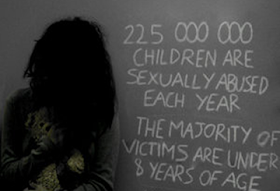
Hidden Pieces: My Life of Abuse
Click Picture For More Information About My Life
Effects of Child Sexual Abuse
Click Picture to Read My Personal Story
Click Picture to Learn More About Borderline Personality Disorder
Click Picture To Learn More About Eating Disorders
Click Picture to Learn More About Self-injury
Click Picture for More Information About Major Depression
Click Picture to Learn About Mental Heath and Other Important Issues & Some Fun Topics
When You Get To The Last Post Click Older Posts For More Posts
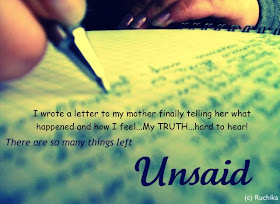
One of "THOSE" letters!!
Click the Picture to Find Out More. Also, look at later date like September & October 2009 to read more about my family's reaction. Blogger is not cooperationing with the search!